
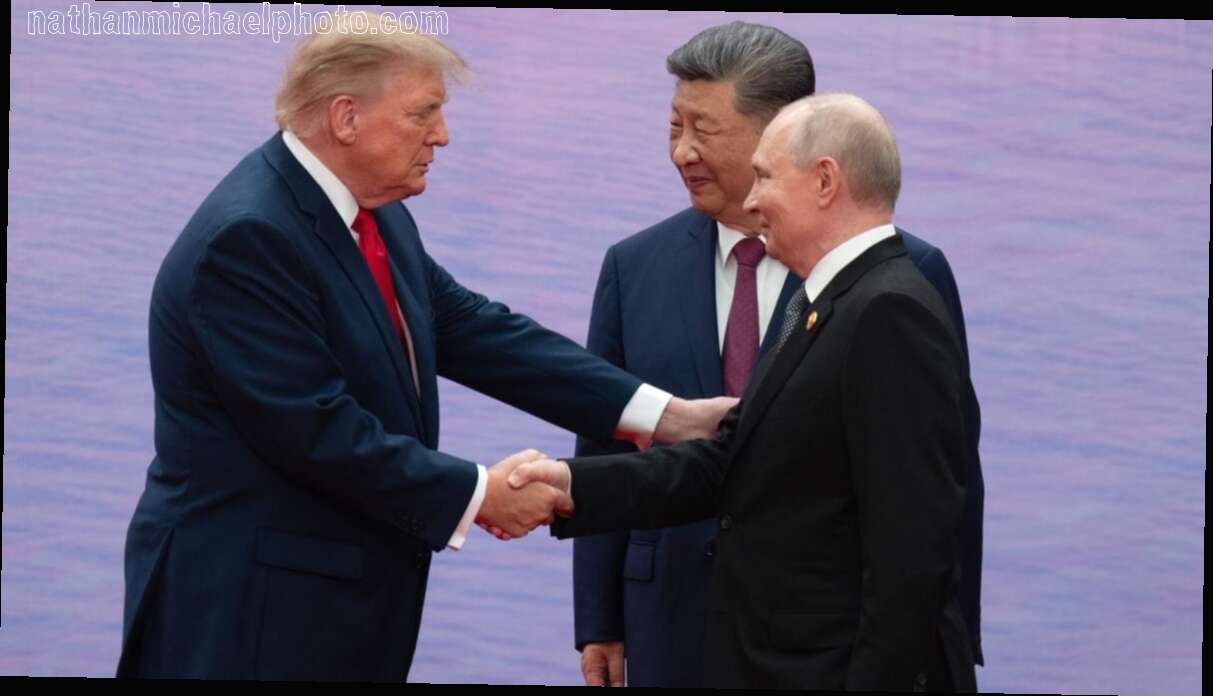
A historic meeting between Donald Trump, Xi Jinping, and Vladimir Putin has produced an ambitious declaration on global peace, nuclear stability, and international cooperation. But while the three leaders presented a united diplomatic front, their agreement leaves several major geopolitical challenges unresolved. The Shenzhen declaration may prove significant, but its real impact will depend on whether political promises translate into concrete action.
1. Can the Shenzhen Declaration Deliver Meaningful Nuclear Arms Control?
During their 90-minute meeting at Shenzhen’s lakeside Kylin Villa, the three leaders reaffirmed that a nuclear war cannot be won and pledged to maintain dialogue on reducing nuclear risks. The announcement comes at a particularly sensitive time, following the expiration of the New START treaty, which removed the last legally binding restrictions on American and Russian strategic nuclear arsenals.
However, a diplomatic promise is not the same as a verifiable arms-control agreement. The United States and Russia each possess more than 5,000 nuclear warheads, while China’s arsenal is estimated at approximately 620. Beijing has repeatedly resisted formal three-way disarmament negotiations, arguing that Washington and Moscow should substantially reduce their larger stockpiles first.
Without inspection procedures, monitoring arrangements, or enforceable limits, the declaration offers little immediate change. The central question is whether the three governments are prepared to move beyond diplomatic language and negotiate measurable nuclear security commitments.
2. What Does the Agreement Mean for Ukraine and Global Energy Security?
Before the summit, Trump expressed his desire to end the Russia-Ukraine conflict, while Putin emphasized shared interests in resolving regional disputes. Yet the final communiqué included no specific ceasefire deadline, territorial framework, or peacekeeping proposal.
Notably, Ukrainian President Volodymyr Zelenskyy and European leaders were absent from the discussions. Any settlement negotiated without Kyiv’s participation could face serious questions about legitimacy and implementation. European governments are also likely to resist arrangements that overlook their regional security concerns.
Energy security was another major priority. The declaration calls for increased production and supplies of refined petroleum products while emphasizing uninterrupted global energy flows. Trump also highlighted the importance of maintaining access through the Strait of Hormuz, a strategic shipping route affected by regional tensions involving Iran.
That said, the document provides no detailed strategy for reducing tensions with Tehran or protecting commercial shipping. Without broader regional cooperation, its energy commitments may prove difficult to achieve.
3. Why Are International Law, Taiwan, and Trade Still Unresolved?
One particularly notable provision concerns the immunity of state officials and the limits of the International Criminal Court (ICC). The declaration warns against what it describes as the misuse of the court’s jurisdiction. This language has attracted attention because Putin faces an active ICC arrest warrant. It also signals resistance from major powers toward international judicial oversight.
Meanwhile, Taiwan remains a major point of disagreement between Washington and Beijing. Xi used the summit’s sidelines to urge Trump to handle the issue appropriately, while longstanding disagreements over tariffs and semiconductor export controls continued in the background.
The declaration’s silence on these subjects is revealing. Joint statements generally emphasize shared positions, meaning that unresolved disagreements are often left out. Ultimately, the Shenzhen summit demonstrates that diplomatic cooperation is possible, but it does not establish a common strategy for addressing the world’s most difficult geopolitical disputes.
The real test will come through follow-up negotiations, verifiable commitments, and meaningful participation from countries directly affected by the decisions. Until then, the declaration represents an important diplomatic gesture rather than a comprehensive roadmap for global stability.